
Road Cookin' Field Note
A 10-Minute Road-Kitchen Reset Before an Overnight Stop
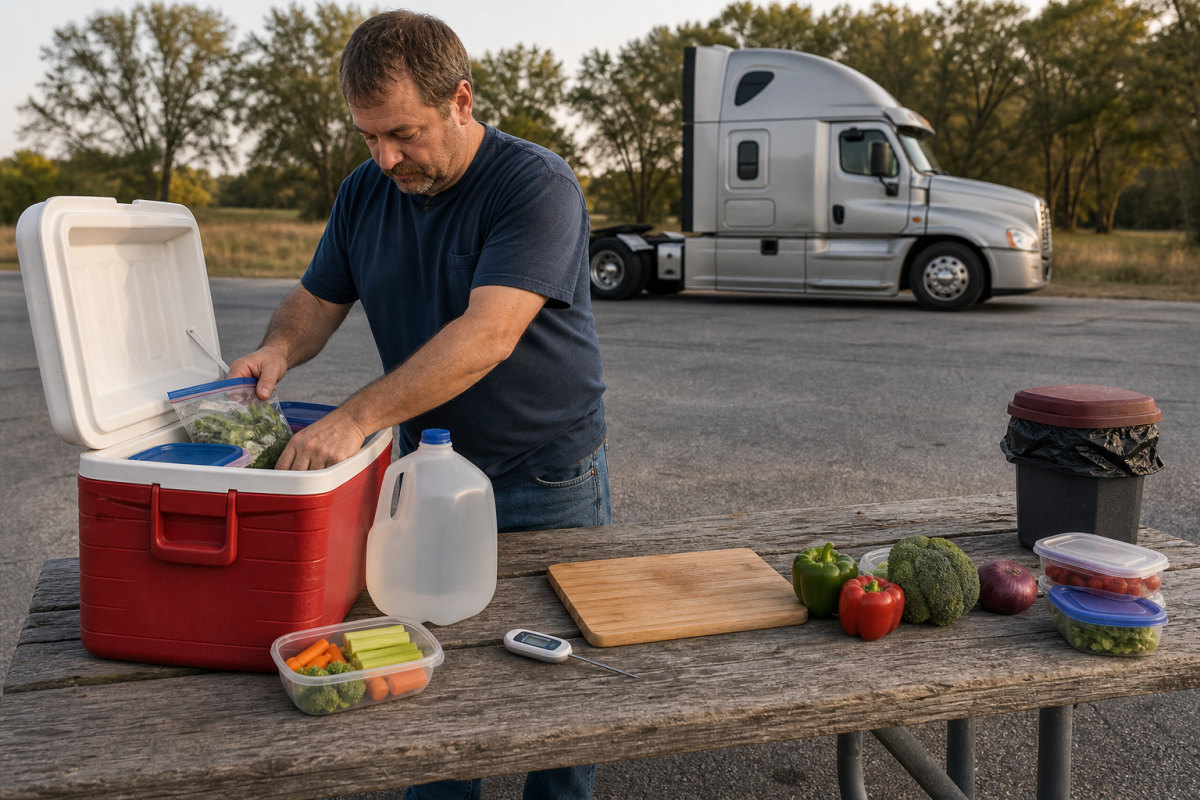
A road kitchen works best when it is treated like a small work station, not a loose pile of groceries and gear. The useful moment to reset it is not after dark when you are already hungry. It is the ten quiet minutes before an overnight stop, while there is still enough daylight to see the cooler thermometer, separate clean items from used ones and decide whether the planned meal still fits the weather and the location.
This routine is deliberately simple. It does not require a perfect pantry or a restaurant-size menu. It asks five practical questions: Is the cooking location allowed and open to the air? Is cold food still cold? Are ready-to-eat foods protected from raw-food juices and dirty tools? Is there a no-cook backup? Can every scrap and container leave with you?
Stop First, Set Up Second
Park completely, set the brake and read the signs before food gear comes out. Rest areas, campgrounds and overnight lots do not all have the same rules. A picnic table is not automatic permission to use a flame, and windy or dry conditions can change what is sensible even when a cooking device is normally allowed.
Keep one rule non-negotiable: a vehicle is not a charcoal kitchen. The U.S. Consumer Product Safety Commission says charcoal must never be used for cooking or heat inside cars, trucks, vans, campers or tents because carbon monoxide can build without a smell or visible warning. Its charcoal safety guidance is a good reason to build a real weather backup instead of moving outdoor equipment into the cab.
Check the Cooler Before You Unpack It
Open the food cooler once, read the thermometer and make the decision while the lid is still up. The USDA Food Safety and Inspection Service advises keeping perishable food below 40 F with ice, frozen gel packs or another cold source. Its food-safety guidance for hiking, camping and boating also recommends keeping a cooler closed, shaded and covered when possible.
Time matters as much as the reading. USDA guidance uses a two-hour limit for perishables above 40 F, reduced to one hour when the air temperature is above 90 F. Smell is not a reliable rescue test. If the temperature and time history are uncertain, choose the shelf-stable backup rather than trying to talk yourself into a risky meal.
A two-cooler system is handy on longer stops: drinks and frequent-grab items go in one, while the food cooler stays shut. If there is only one cooler, put sealed raw meat below ready-to-eat items and keep the next meal near the top so you are not digging through everything.
Give the Table a Clean Side and a Used Side
Before the cutting board lands, decide which half of the table is the clean zone. Place the water jug, clean towel, utensils and ready-to-eat ingredients there. The other half is for packaging, used tools and the lidded trash container. That one decision prevents a surprising amount of back-and-forth.
Wash hands before touching food and again after handling raw meat. Use one board for ready-to-eat food unless a separate raw-food board is available. A small food thermometer earns its space because it answers a cooking question that color and guesswork cannot. When water is limited, make the menu easier: whole fruit, shelf-stable packets, dry whole-grain foods and a sealed ready-to-eat protein can be a better road meal than an ambitious recipe with a complicated cleanup.
Build a Weather Backup You Will Actually Eat
A backup meal is not an emergency ration buried behind the seat. It should be something you already like, packed where you can reach it without opening the cold cooler. A practical combination might include a shelf-stable protein, whole-grain crackers or a wrap, whole fruit and water. Check the package directions and choose items that do not require heating or refrigeration before opening.
The point is to remove pressure. If rain, wind, a posted restriction or a crowded stop makes outdoor cooking a poor choice, the backup keeps the decision easy. Save the planned recipe for a better location. The existing Road Cookin' Recipes and Sample Menu pages can still guide the next properly equipped stop.
Close the Loop Before You Move
The National Park Service's Cooking in Camp guidance recommends airtight containers, never leaving food unattended and keeping camp free of food scraps and packaging. Those habits also make sense at a roadside table. Wipe the surface, seal leftovers, account for utensils and pick up crumbs that could attract wildlife.
Pack trash and food scraps into a closed container until they reach an approved receptacle. Do not leave a bag beside an overflowing bin. Put clean gear back in one tote and used items in another so tomorrow's first meal does not begin with a mystery. Finally, close and secure the cooler before the truck moves.
The 10-Minute Reset Card
- Minute 1: Park, read posted rules and choose an open-air setup area.
- Minutes 2-3: Check cooler temperature, cold sources and time out of refrigeration.
- Minutes 4-5: Set clean and used zones; wash hands and stage only the tools needed.
- Minutes 6-7: Confirm the meal or switch to the no-cook shelf-stable backup.
- Minutes 8-9: Seal leftovers, separate used tools and pack every scrap.
- Minute 10: Secure the cooler, water and totes for the next driving day.
Leave One Useful Note
Write down one fact, not a promise: how much ice remains, which container should be eaten first or what needs washing at the next full-service stop. A factual note makes the next decision quicker. It also keeps the road kitchen from collecting half-remembered ingredients and duplicate supplies.
A ten-minute reset will not make every stop predictable. It does make the next meal easier to judge. The cooler has a number, the table has a clean side, the weather has a backup and the site is left without food or trash. That is a road kitchen ready for another mile.
Always follow posted site rules and the manufacturer's instructions for any cooking or electrical equipment. Food-safety decisions should be based on time and temperature, not appearance alone.